Tuesday, September 20, 2016

The Weakness of God

Malcolm Gladwell has a podcast called Revisionist History. I recently listened to episode 7, The Weakness of God entitled “Hallelujah”. In this episode, he talks about artistic genius and how it
works. Sometimes it is seen in Bob Dylan, who writes songs that practically write themselves. Other times it is like Cézanne, who has been called an experimental innovator. He experiments, doesn’t like it, changes it, and (after many iterations) comes up with a painting he likes. The episode spends a good deal of time talking about Leonard Cohen’s song “Hallelujah”. This song is in the consciousness of most contemporary music lovers, but it almost never came to be. Its history includes several years, several record labels, and several artists taking it up and rewriting it. It took a number of people, a lot of luck, and unique circumstances to give us the song we have today.

That is kind of what happened to this essay. I’ve turned in four different “final drafts.” I probably should not have been so eager to submit each one. Each time, it did not convey what I originally hoped to say. It’s a bit embarrassing. Tom and his editors have been very gracious. Friends have offered their input, and I have had experiences that have helped me reflect on what to write. I’m not trying to say I am a creative genius, just that my brain seems to work like these experimental innovators, and the collaboration of others combined with time, experiences, and contemporary circumstances have all worked together to create this essay.

When I imagine God anew with the theological lens of open and relational providence presented in The Uncontrolling Love of God, many possibilities become available in how to interpret scripture and think about God with an eye for Shalom. Becoming aware of my assumptions reforms something lower and more foundational than beliefs or doctrines. Knowing I am created in God’s image, I am reminded this is what God is like, with an open mind to the future and the audacity to cooperate with humanity and creation as an experimental innovator.

God is like Jesus
I’m not sure where I picked up the idea, but my default assumption used to be that Jesus was somehow less than God. Without ever saying it out loud, I assumed that Jesus was not the complete package. The powerful, violent God of the Old Testament was being subtracted from in the revelation of Jesus. Some Bible scholars like to interpret the Apostle Paul’s letter to the Philippians to say he “emptied himself” in this way. But recently, theologians are thinking about this differently. Instead of talking about how God diminished God’s self in the incarnation, some are saying the revelation of God in Jesus is a more complete revelation of God’s true nature. (pp. 153-160)

This means God’s full nature can be seen in how Jesus lived, taught and acted. It was radical then, and it still is today. We need look no further than Jesus to see what God is like. And it is clear that Jesus was love personified. He lived and died a self-sacrificial life. His weakness was his superpower. He overcame violence and death by nonviolence. He told Pilate his followers would not fight. His kingdom is different (John 18:36). Colossians 1:15 tells us, “He is the image of the invisible God.” Tom says in chapter 7, “God’s power is essentially persuasive and vulnerable, not overpowering and aloof. We especially see God’s non-coercive power revealed in the cross… which suggests that God’s power is cruciform… other-oriented love. (p. 155)” In my opinion, Tom even goes as far to suggest Jesus was an experimental innovator. He describes Jesus as seeking people to cooperate with him in miracles of healing. Jesus does no healing where the people do not believe, rather he often says, “Your faith has healed you. (pp. 199-204)”

If we keep separate the God of the Old Testament from Jesus and read all scripture as equal, we may extrapolate a God that brings justice with a sword instead of a cross. It matters what lens we are using. As those following an uncontrolling God, we examine the scriptures with new eyes, the eyes of Jesus.

God is looking for partners in the new creation project. God is looking for vulnerable, other-oriented people like you and me, who are willing to love at great risk to ourselves and to influence the dynamic cosmos for good. God is looking for partners who understand the gospel of peace and how to live it in a cruciform fashion. God is looking for partners who use mercy and restorative justice as their weapons, who stand with the rejected, who long for the reconciliation of all things, and who will do no harm (no matter how right it may seem).

Tom Oord’s The Uncontrolling Love of God is advocating that God’s transformative quality is love, not power. From a certain perspective, this may seem like a weakness.  We, in our humanness, tend to like the certainty of guarantees through a coercive, forceful God. The God revealed in Jesus imagines a new world of mercy, peace, and enemy love that brings a new hope for everyone. This is the God of uncontrolling love.

Monday, November 30, 2015

In The Beginning...

† The photo above was taken by the Hubble telescope. Each light speck is a galaxy - some of these are as old as 13.2 billion years - the universe is estimated to contain 200 billion galaxies.

In the beginning God created the heavens and the earth.  ~ Genesis 1:1

Scientific evidence in the last century indicates that the cosmos, everything that is, started from a single point. As it turns out, atoms, the stuff everything is made of, are 99% empty space. If you were able to take that space out of all the atoms in the universe, what would be left would fit in a thimble. This theory goes on to posit that this single point when the entire cosmos was compacted in possibility, just waiting to become, to be... was 13.8 billion years ago. Then, a flash of light, an explosion happened. A sound was uttered and all of that potentiality was ushered into motion.
That is amazing enough, but the most amazing part is what happened after that. Things started getting more complicated, literally. Conditions were such that subatomic particles appeared, then simple atoms, then cells, then life! And guess what? The crowning jewel of creation, the most complex combination of particles, atoms, cells, neurons, flesh and blood came on the last day, the last minute actually.
As technology has progressed scientists have been able to see more and more. They are even reporting being able to see down to the particle level. You won't believe this, but these particles don't behave well. Some of them disappear and reappear in another place, not having traveled the distance between the two points. Kinda freaky huh? It's like whoever is behind all this amazing, imaginative creativity could make a human body made of particles, atoms, cells and tissue - appear and disappear, walk through walls and doors; or even a whole dimension could exist right in the same space as another, just waiting to be joined into one.
As followers of Jesus this is extremely hopeful. The creator of the cosmos is pulling all of creation forward and it is becoming more complex. In Paul's letter to the church in Colossae we read:
The Son is the image of the invisible God, the firstborn over all creation. For in him all things were created: things in heaven and on earth, visible and invisible, whether thrones or powers or rulers or authorities; all things have been created through him and for him. He is before all things, and in him all things hold together. And he is the head of the body, the church; he is the beginning and the firstborn from among the dead, so that in everything he might have the supremacy. For God was pleased to have all his fullness dwell in him, and through him to reconcile to himself all things, whether things on earth or things in heaven, by making peace through his blood, shed on the cross. vv. 15-20 NIV
Maybe the next level is the reconciliation of all things. Possibly, the Church is Christ's means of doing this. We are more connected than we know. Maybe the connectedness of creation, the new creation is what is evolving now. We can participate in God's creation by imitating God revealed in Jesus. We can love our neighbor as ourselves, which means all of humanity including our enemy. And, we can care for God's earth in anticipation of the renewal of all things.
For the creation waits in eager expectation for the children of God to be revealed. For the creation was subjected to frustration, not by its own choice, but by the will of the one who subjected it, in hope that the creation itself will be liberated from its bondage to decay and brought into the freedom and glory of the children of God. We know that the whole creation has been groaning as in the pains of childbirth right up to the present time. Not only so, but we ourselves, who have the firstfruits of the Spirit, groan inwardly as we wait eagerly for our adoption [as children], the redemption of our bodies. Romans 19-22 NIV
Sources:
"Are virtual particles really constantly popping in and out of existence? Or are they merely a mathematical bookkeeping device for quantum mechanics?." Scientific American. 09 Oct. 2006. http://www.scientificamerican.com/article/are-virtual-particles-rea/
"Big Bang." Wikipedia 2015. https://en.wikipedia.org/wiki/Big_Bang
"History of Earth in 24 hour clock" FlowingData 2012. http://flowingdata.com/2012/10/09/history-of-earth-in-24-hour-clock/
Picket, Kate; Wilkinson, Richard. "The Spirit Level: Why Greater Equality Makes Societies Stronger." Bloomsbury Press. 26 Apr. 2011.

Tuesday, January 14, 2014

Emerging thoughts regarding the Emergence of Emergent Christianity21 in Denver

I attended the Christianity21 conference last week in Denver. I met my brother Travis there. The restaurants were awesome, and we got tickets to the Nuggets game on Saturday night. We had lots of time to talk about the future of the church and what theology is becoming. Yep, we're theology nerds.

We heard 35 different people talk in 48 hours. Plus, we spent time in conversation with other faith journey pilgrims. Some like us, some not. As you can imagine, it was overwhelming. The music by Heatherlyn was poignant, and beautiful. Every speaker had something good to say. It's not possible here to say something about each of them, but I thought I would share a few reflections from the week.

I arrived an hour or two early, so I had some time to stroll through the fellowship hall. Here were several tables of books and a few booths of publishers, and seminaries. Reading some of the titles I got a quick idea that I had entered a realm of questions and transition... leaving something that hadn't been working and moving toward something not quite sure of. Book titles like The Great Emergence, Banned Questions About the Bible, Gracenomics, Reluctant Pilgrim, A Faith of Our Own, The Church is Flat, Jesus is Better Than We Imagined, A Christianity Worth Believing, and Beyond the Broken Church; I quickly realized I was among broken people and I felt at home.

This was WYSIWYG if I've ever seen it; people who seemed tired of posturing and longed to talk with others who were authentic and willing to say "I don't know." This was apparent right away when Jonathan Merritt told us, "May we know what we've always suspected, that the God who created us is better than the God we've created." Later that first night we heard from Kent Dobson. He looked worn and ravaged to me. I could only guess he had been through some tough times lately. Kent is the teaching pastor of Mars Hill Bible Church. This is the church Rob Bell recently left; nuff said. He told us about growing up in the lap of Jerry Falwell (his keynote presentation showed a picture of this very thing), his experience in the conservative evangelical church, and going to Liberty University. He talked about his journey out of that. He did not give us a map of certainty. Honestly, he wasn't certain about a lot. All he had for us were hints and guesses, but he said something very important for me. He said, "I'm not going back!"

There have been times in my life where I have felt that what I was sensing, what I thought God was forming in me, and what I was reading in the Bible... was not being affirmed. A theological concept that had never made sense to me as it was explained, was now, in a new context, making sense. And, in sharing my excitement... crickets. This was crazy making really, and depressing. Last week it was affirming to be among likeminded people; to know I wasn't crazy, and to proclaim that I too was not going back!

I've heard some say that the Emergent Church movement is dead, heretical, or just warmed over liberalism. I have never thought of it as a group with a cohesive set of beliefs, and organizing intentions. To me it is people talking together, encouraging each other, creating safe space. It's people realizing the Church needs to change and is changing. And for it to make sense in a 21st century global context we need to change with it. To me this change is new. Many like myself have become disillusioned with the evangelical church we were brought up in, but don't want to loose some of the sensibilities we grew up with.

Update: Charles Lee is the CEO for a brand innovation company. What was interesting to me is how he sees innovation happening. He said the best way to be innovative is to get out of your normal connections; be with people that are different than what you are used to. This seems to help us see beyond the constructs we live in. If fresh expressions of faith require innovation; breaking free from the dominant constructs, it's not a bad idea to hang out with people that have a different perspective.

Phyllis Tickle spoke about the coming Age of the Spirit, and the influence the renewal movement is having on Christianity. She said that every major shift in the last 2000 years has been followed by a spiritual renewal. She has written in the past about the Great Emergence we are experiencing now. It was so good to see her in this, her last speaking appearance. At 82 she is starting another chapter of her life at home on her farm in Lucy Tennessee.

It was the emergent books, podcasts and conferences that really sparked my hope that there was something better for me when it comes to church. And, instead of leaving the Church all together, I found the Mennonites. The people at this conference are doing this, as well as others. Not a large percentage of the population; it's that 5-10%; the early adopters. The emergent conversation is affirming something growing inside of them and they are taking it back to their tribe, or they are finding a new, welcoming tribe that affirms this movement of Jesus in them. People that have more questions than answers.

Sarah Bessey spoke to us about Jesus. She has a book called Jesus Feminist. She said she had managed to piss off people on the right and left in just two words. What I picked up immediately and what permeated her talk was her love for Jesus. And, this is one of the things that is distinctive about emergent people. They love Jesus and want to take him seriously... especially his love. Sarah talked about that verse in 1 John where it says "perfect love drives out fear... even fear of the slippery slope.

Christianity21 did better than most Christian conferences at balancing the gender, and ethnic speakers. This was intentional and wonderful. Jose Morales reminded us that like him, Jesus was a "hyphen," living between two or more worlds, and his preference is for the "hyphenated." Enuma Okoro encouraged us to be more in touch with the global church by being willing to learn from others and more curious about how others do it. Romal Tune implored us to be 'sanctified shot callers' on the streets and to learn from gangs how to make contact with youth and foster belonging. And Joshua Dubois told us about his grandmother's influence on his life. How it was her example that helped him move from a professional Christian to becoming a disciple of Christ; empowered by the Holy Spirit for God's glory.

There are so many great thoughts and quotes. You can check out my twitter feed. I chronicle the conference best in this medium. I either tweeted a thought myself or retweeted someone else's tweet that expressed what I wanted to remember. It's note taking in the 21st century.

The last three talks have been haunting me the most. Tony Jones agreed with Kent Dobson from the first day. "We must reclaim the apocolapse." Well, actually Kent said we should give up on the afterlife for awhile (and focus more on this life). Tony was saying we need to reclaim a better reading of Revelation. To see it as a powerful drama to live into that can transform our lives instead of a code to decipher about the end of the world. For further reading I would recommend this book.

Doug Pagitt said many good things, but one thing stuck with me. He was quoting Jesus where he says, "You will do greater things than me..." then he said, but you can't do it alone. We will need to do it together. The Community is so important here. This American, individualism, personal Jesus stuff won't cut it. Again, affirming my being led to a tribe that lives by the communal hermeneutic.

And finally, Sarah Cunningham spoke about something dear to my heart. The middle. Our world is fragmented and polarized. She was calling for peacemakers that will be quick to listen, seeking to understand before being understood. Peacemakers seeking to hold hands with those on the right and the left and connect brothers and sisters; all of us children of God. I'm going to try to do this more. Instead of making my point, I'm going to seek to love, listen and bring more peace than dissension.

Monday, November 25, 2013

Some Reflections on Football...

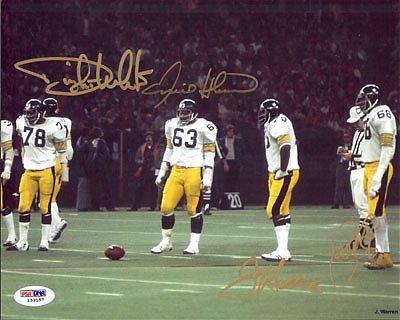
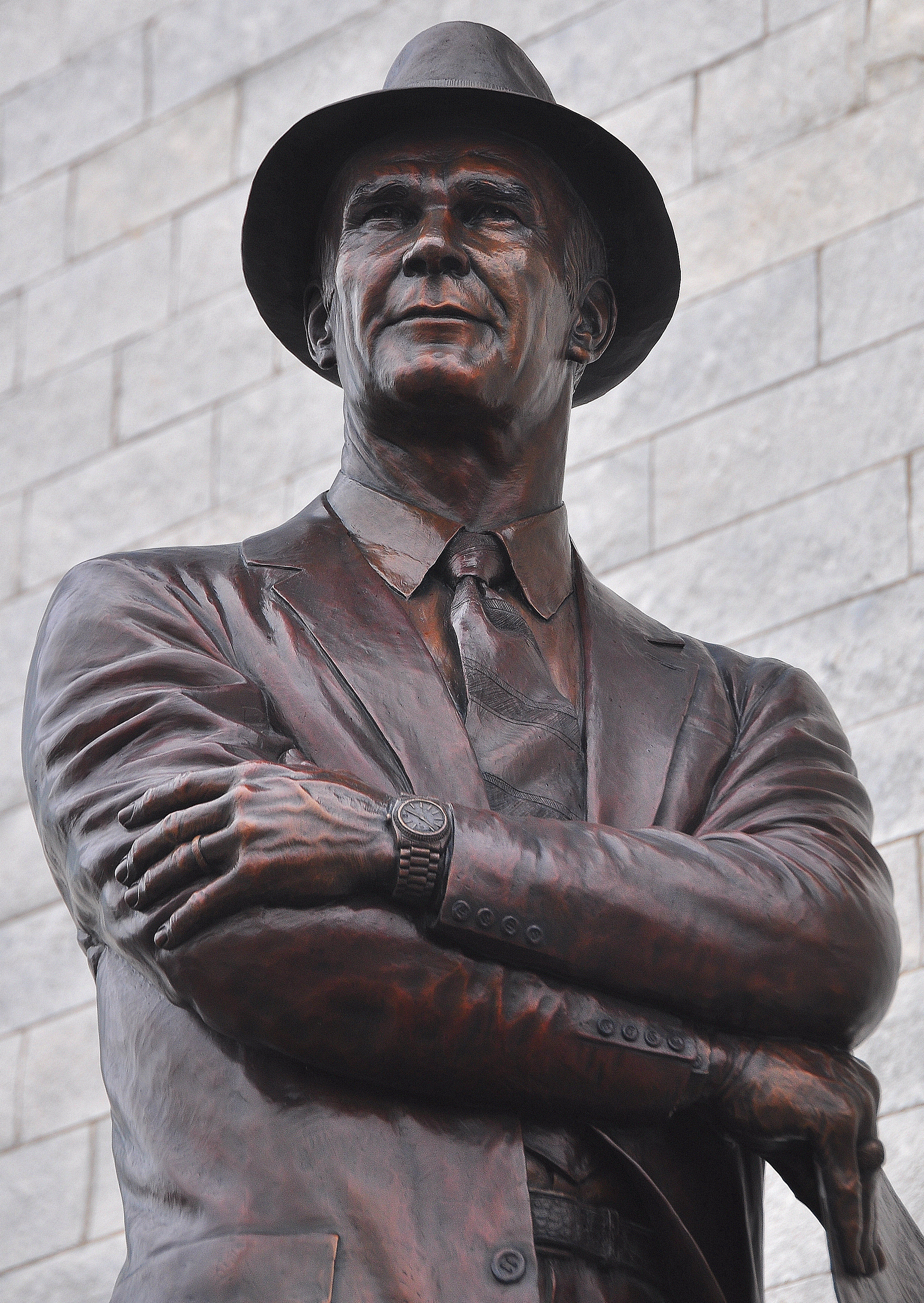
I am a football fan. I have been most of my life. I remember first playing "Young America" football in my hometown during the fall of 4th grade. Our team was the Sharks. It was tackle football, full pads. I would ride to practice on my banana seat, high handle bars bicycle in full regalia. The seventies were a special time. Those were the years of the Steel Curtain, Tom Landry in a suit and hat and Woody Hayes punching opposing players.

My teams are the Iowa Hawkeyes and the Denver Broncos. I married into Hawkeye Nation. I've been to more Iowa football games over the last 25 years than I can count. There is nothing like gameday in Iowa City. And, nothing like being with 70,000 fans at historic Kinnick stadium. My love of the Broncos started in 1977 with the Orange Crush's first Super Bowl season. I have fond memories of riding my bike to Bronco training camp at the University of Northern Colorado in Greeley. I sat through 4 Super Bowl loses. Then on January 25th, 1998, my 33rd birthday, I watched Super Bowl XXXII in the basement of my home with my parents. When Denver finally won, we cried tears of joy, or relief. I'm not sure which.

My first year of high school I went out for football after a hiatus since 4th grade. My first love was baseball. I have no idea why I went out for the team. I was adamant about it though. I quickly learned this was a different culture. You had to be tough. Tough to survive two-a-days. Tough to make it from one water break to another. Tough to live through hazing the seniors did to the rookies. We had a training camp drill called "The Pit." Players were pitted against each other to see which was strongest and most technically sound at hitting his opponent. My name was barked out, along with the starting, senior tight-end. The whistle kept blowing and I kept beating him. I have a body made for this; broad shoulders, strong thick legs and back. For the rest of the year I was punched, tripped, urinated upon; on the field, in the hallway, in the shower. The entire senior class of football players took part in this. I had broken an unspoken rule. I had shamed him. To regain respect, he recruited his comrades (and his younger brother I might add) to beat me into submission. I survived, and told no one. I didn't tell this story for years. In fact, I think I was 35 before I put the training camp drill together with the bullying.

I became a good enough high school football player to get a scholarship to play in college. I played for 2 years before I quit to get serious about my studies. The football culture was very similar in college. I remember the seniors putting Ben Gay in my jock strap. Pranks, or bullying like this seemed to always involve genitals, urine or excrement. Violence was also part of the culture. My coaches in high school gave awards to the players who had the hardest hits! I still have a t-shirt I earned as a senior with the words "slobber knocker" on it. In both high school and college we received skull and crossbones stickers for violence dished out. We put these on our helmets. I was not surprised to hear NFL coaches were paying their players to hurt their opponents.

These last 2-3 years I have had a growing discontent about football. It doesn't hold my attention like it used to. When I do watch it I sense something about it is wrong. I'm not exactly sure what it is, but whatever it is, it is growing. Maybe it is the money being spent. Money spent for tickets, team gear, stadiums, or player contracts. It seems grotesquely out of proportion; to what, I can't say. Maybe it is the health concerns going unaddressed and the early deaths and suicides of athletes. There is overwhelming evidence of concussion damage. There seems to be an obsession with players getting stronger, bigger, and faster, and starting strength and conditioning programs at earlier and earlier ages.

It could be the intense nationalism and militarism exhibited more in football since 9/11. We have always honored our country in sports, but since 2001 that escalation in this experience is unmistakable. I was at the Super Bowl in New Orleans after that fateful September. They changed the entire motif from Marti Gras to a patriotic theme. Getting into the super dome was crazy. I still have a bobble head figurine with the Marti Gras theme that was left over and sold cheap. Just recently, Northwestern University upped the anti for Veteran's Day and wore special commemorative uniforms. You can see the blood spattered in the design. The designers defended the design as honoring our veterans for giving their blood. I thought it was over the top. Walter Brueggemann, a Old Testament Scholar says, "Football is the liturgy of Empire." That has stuck with me. It keeps nagging at me from the back of my mind. Catching Fire, the second of the Hunger Games films is out. I plan to see it. It's remarkable how much in common the Hunger Games, Ancient Rome's Gladiators, and America's game have in common. Notably, "bread and circuses."

So, as you can see there are a lot of ethical issues here that I've been thinking about. And, I haven't decided what I'm going to do. I really do like watching football, but I can't get around the idea that I'm participating in a system that has some major problems. The thing that gnaws at me the most is this thought that football fanaticism is a type of religion in America. From this perspective, football stadiums are the most attended places of worship on Sundays in the nation. If that's the case, then I've got an allegiance problem. Because I've decided to follow Jesus. And like an 80 some year old friend of mine said recently after listening to our group's discussion about this topic, "It does't sound much like Jesus, does it?"

Sunday, May 5, 2013

Getting Schooled in Useful Technology

This past week my attention was drawn to how decisions are made to bring technology into the learning environment; namely our schools. The state of Maine decided to end their 11 year contract with Apple and award the bid to Hewlett Packard. For $13 less per student, every Maine child in the public school system will have an HP laptop running Windows 8 instead of an Apple MacBook Air. Part of Apple's bid was a 4 year support program called AppleCare. Always the most highly rated such program in personal computers and 1 year longer than the normal retail program. I won't go into all the reasons Maine made a bad decision. That has already been covered. If you read about it, be sure to pay attention to the comments. They are the best part.

Today I was at an open house for the private high school my children attend. I listened to the business teacher present the plans for upgrading the technology. Last year the school (and really the community that supports it) won $50,000.00 from US Cellular in a contest. They plan to use the money to upgrade their technology. Now mind you, $50,000.00 will not go far, but as I listened to the presentation today I was impressed with their wise decisions. First, and I believe most important, they will be installing a school wide wireless network that is state of the art with the best security. Everything will be wireless. So, step one is visionary... The future is wireless. Second, they are buying several iPads and plan to use the wireless network and the iPad mirroring functionality along with digital projectors to interact in class on a screen. Not only the teacher and her or his iPad, but the students may bring their iOS devices to class and join in on the prophetic imagination. They chose to do this instead of Smart Boards, because Smart Boards cost $2500.00. iPads will cost $400.00 (not to mention there are hundreds of thousands of apps in the iOS app store for the iPad, iPhone and iPod). Do you see the difference between David and Goliath yet?

Iowa Mennonite School (IMS) also plans to buy a few laptops. Several of them will be the Samsung ChromeBooks. The link has a quick review I did at Best Buy near the end of this video. I'm not impressed with these, because of the limiting nature of Google's Chrome operating system (OS), but I think this is not a bad decision since these laptops are only $250.00, and IMS plans to have all students use the Google Drive ecosystem of storage and collaboration of documents and web apps. Most of this is free and works great together. Again, they are leveraging free and being visionary about wireless and cloud technology. Any piece of hardware you buy will be obsolete as soon as you walk out of the store.

IMS also plans to get a few Asus and HP laptops for the computer lab and teachers. These are cheaper than Apple laptops in the short run, but as you remember from reading the article about Maine, research shows in the long run, Apple pays for itself with less problems and superior support. Not to mention losing out on GarageBand, iMovie, iPhoto and iTunes. The creativity of the iLife suite that comes on every Apple computer is hard to beat. These fit so well with iPads too. The art, music and drama departments are some of the bigger losers here.

I am not as worried about this last item. Students will still be able to use Apple devices of their own, and these play well with Google too. The important decisions are wireless and cloud. And I say well done IMS!

Saturday, March 30, 2013

An Open Letter to the University of Iowa regarding their sports app


Dear University of Iowa,

I will not be renewing my subscription to the Iowa Hawkeyes iOS app in April. There are several reasons for this:
1. Poor customer service. Patronizing replies to valid questions. No attempts to satisfy customers. Poor communication. No accessibility.
2. Poor service delivery. Some game audio starts late or doesn't happen. No pre-game audio or adequate post-game audio. Radio audio always happens.
3. Poor app design. Using customers as beta testers.
4. Too expensive. Charging fans and not building good will with fan base for services that the market shows should be a one time charge or free.

As a replacement to the convenience of using my smart phone I will listen to games on the AM radio in my car, house and portable transistor radio. I will also take every opportunity I have to tell other fans about my negative experience with this app; in person and through social media.

Lon Marshall
Iowa City, IA

Wednesday, February 13, 2013

Peacemaking in Marriage and Family Therapy

"Go to the people. Live with them, learn from them, love them. Start with what they know, build with what they have. But of the best leaders, when the work is done, the task accomplished, the people will say, "We have done this ourselves." -a Chinese Proverb, written by Lao-Tzu around 700 B.C
I am always looking for new metaphors to help me describe what I do. And sometimes very old can be new as in this quote from 2,800 years ago. As a Marriage and Family Therapist I am always looking more at what is happening between people than what I could believe is behind them or broken. I am concerned with language, interactions, rituals and traditions. I am a sociologist of sorts, but on a micro level.

There has been a revolution of mind and perception happening to me over the last few years; a spiritual journey of sorts. I have come to the Mennonites from outside. I believe I was led to this place; or wooed may be a better term. Peacemaking has captured my imagination. Mennonites do this as good or better than any other group. Google it and you will see what I mean.

It dawned on me recently this is what I do. No, I'm not holding peace talks between nations, or organizing non-violent resistance strategies. But, I am negotiating relationships, encouraging forgiveness and kindness between those who have hurt each other. I am helping people make peace with one another, themselves, and God.

Most couples that go to marriage counseling assume I want to hear about their problems. One couple began telling me about their arguments. As I often do, I asked about how their fights end. This surprised them a bit, but they were willing to indulge my curiosity. He said she gets a certain tone in her voice. I asked him to describe it, but he could not. He knew it when he heard it. She said he gets a certain look in his eye. She also could not describe this, but she knew it when she saw it. I asked them to watch for these fight ending, or making-up cues; and, if possible, to intentionally start them sooner in their arguments. Over the next few meetings their disagreements became shorter, fewer, and less intense. They, of course, kept doing more of the making up behaviors. However, we talked about what they were doing instead of arguing like, cooperating, talking, spending time together, sharing common interests, being more intimate, and becoming better friends.

When Jason Boone, the coordinating minister for the Peace and Justice Support Network spoke at our church recently he said something interesting. "With violence there is only one way. With love your options are limitless." I hear these amazing, creative stories of how peacemakers have negotiated peace in the most tenuous of situations. Some of them make you laugh. Consider Leymah Gbowee, the Nobel Peace Prize winner. She and the women of Liberia ended a civil war and brought a warlord like Charles Taylor to justice with prayer vigils and a sex strike. Leymah threatened to take off all her clothes at the eventual peace talks when an impasse had been reached, unless they would continue to talk. Reminds me of some of Jesus' suggestions in the Sermon on the Mount.

Sometimes people are so stuck in negative patterns that creativity is needed to help them find freedom from oppressive systems. Milton Erickson once said, "symptoms often outlive their causes and the people afflicted by them are looking for a graceful exit." Whether it is helping a couple escape an escalating vicious cycle of accuse and defend by prescribing intentional fighting unbeknownst to the other, or deconstructing the nefarious, political effects of anorexia or bullying to reveal competent young people, or seeking restorative justice by extending invitations of responsibility to men who have abused; defying the common held dehumanizing beliefs, and instead believing that perpetrator as well as victim can know the full healing of God's Kingdom. These are all examples of proactively, resisting injustice. This is peacemaking; peacemaking in marriage and family therapy.